
The NEPHEWS project supports knowledge exchange through research visits by early-stage researchers to European user facilities.
In March 2026, Research Associate Dr. Jelena Pajović completed a research visit to the ELBE Center for High-Power Radiation Sources at Helmholtz-Zentrum Dresden-Rossendorf (HZDR), Germany.
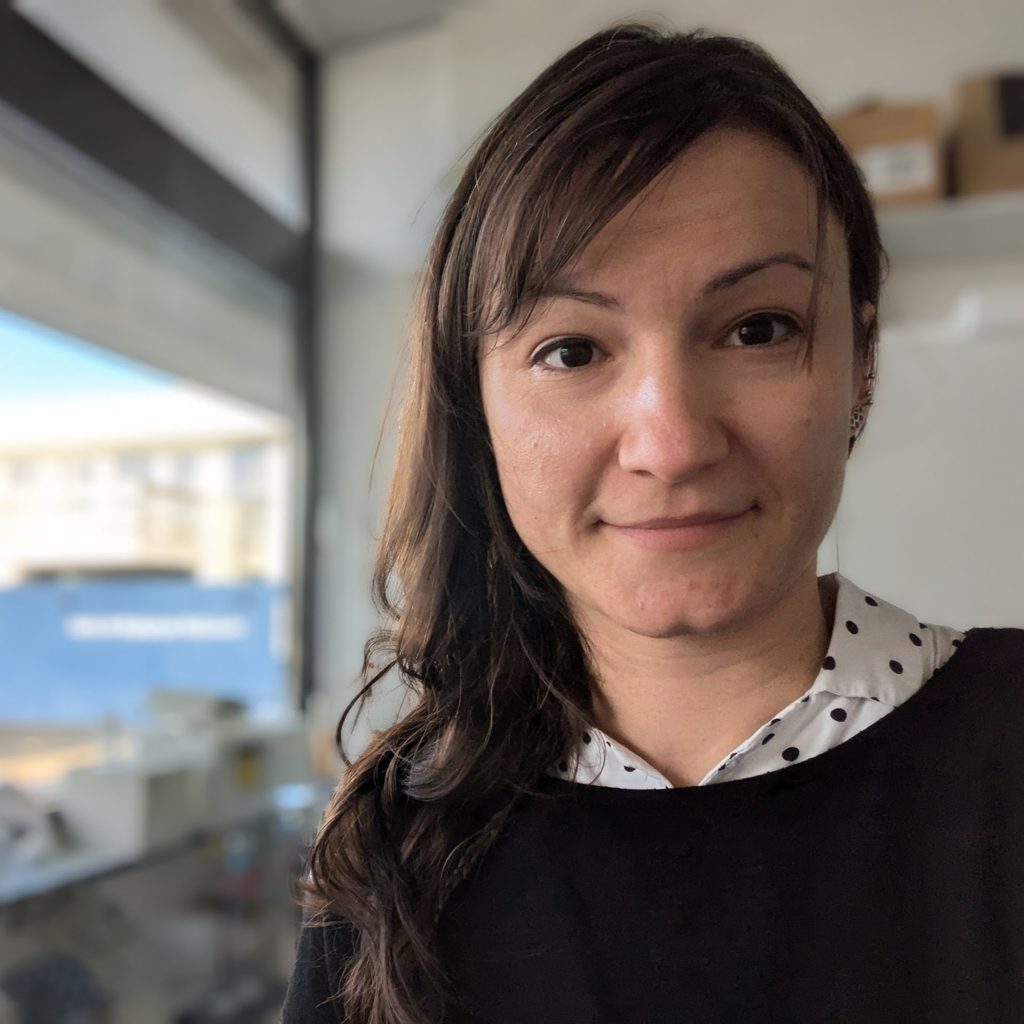
Jelena comes from the University of Belgrade, Serbia. She is an experimental physicist with a background in the photophysics of functionalized nanoparticles. Her visit to HZDR provided an opportunity to explore accelerator-based THz radiation and its applications in ultrafast spectroscopy.
During her stay at the ELBE facility, Jelena joined the beamtime of two HZDR researchers who welcomed her to their experiments. Discussions and an exchange of expertise provided her with valuable insight into THz physics and the experimental methods used to characterize the radiation and prepare the detection system.
“During my stay at the ELBE facility at HZDR in Dresden, I had the opportunity to learn about experiments using intense THz radiation. I gained insight into how these experiments are set up, optimized, and carried out, from characterizing the radiation to preparing the detection system.”
The visit enabled Jelena to:
The visit also introduced her to a proposed method for probing the electric field of a free-electron laser (FEL) using its naturally generated high harmonics, with the aim of achieving sub-cycle temporal resolution. This approach prompted her to consider how related methods might be applied to investigate nonlinear effects in her own nanoparticle systems.
“Beyond the technical insights, I also gained a better understanding of how to prepare beamtime proposals aimed at investigating nonlinear effects in my own nanoparticle systems.”
Reflecting on the experience, Jelena said:
“This visit was an important step in my development as an independent researcher. I am grateful for the opportunity to see first-hand how optical experiments differ depending on the spectral range and the physical phenomena being investigated, while sharing many of the same underlying principles. The experience broadened my perspective on experimental physics and gave me new ideas for applying these methods to my own research.”
The NEPHEWS project supports the next generation of researchers by facilitating access to state-of-the-art user facilities across Europe.
Author: ELBE Team