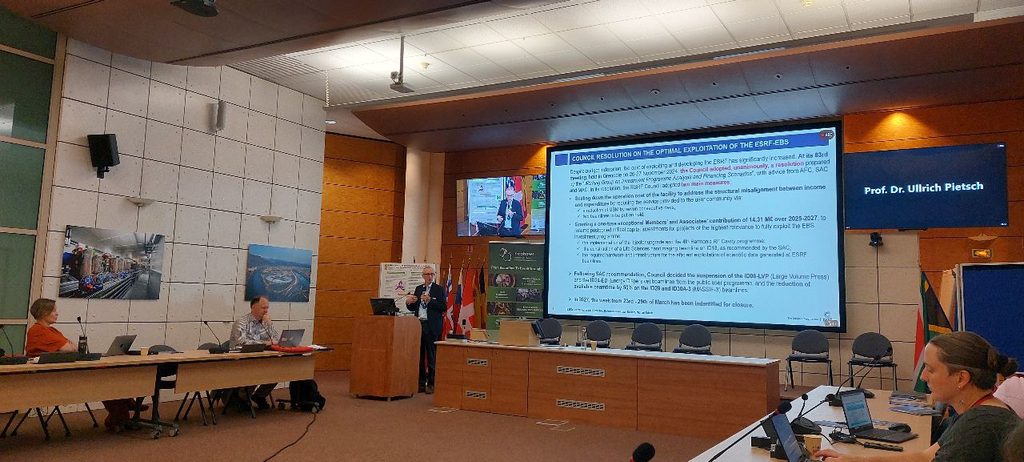
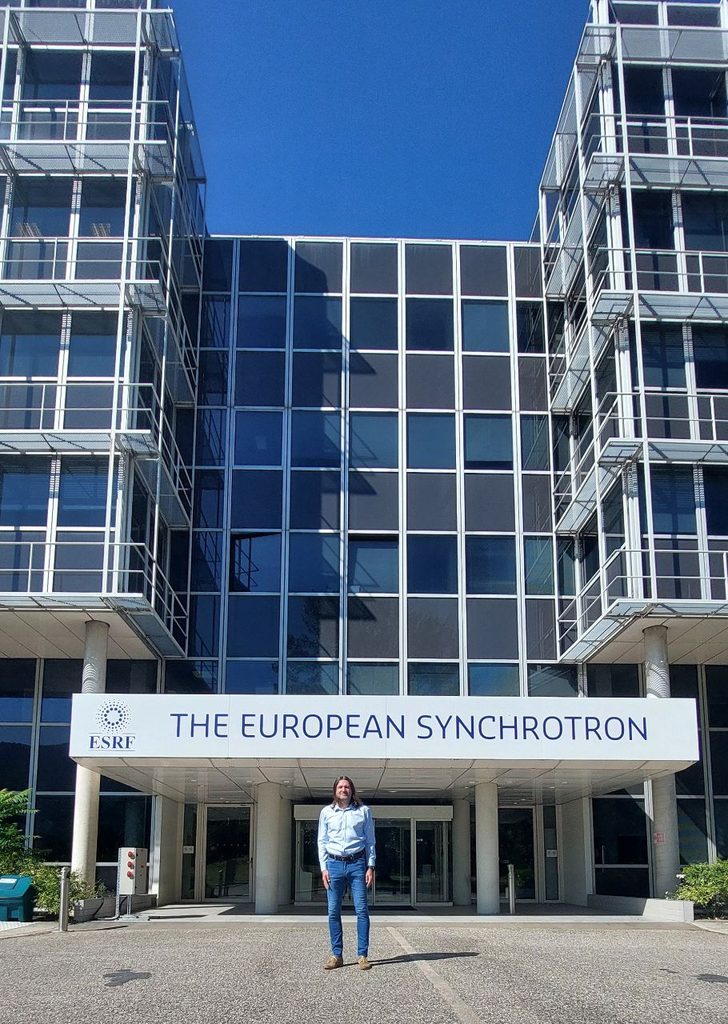
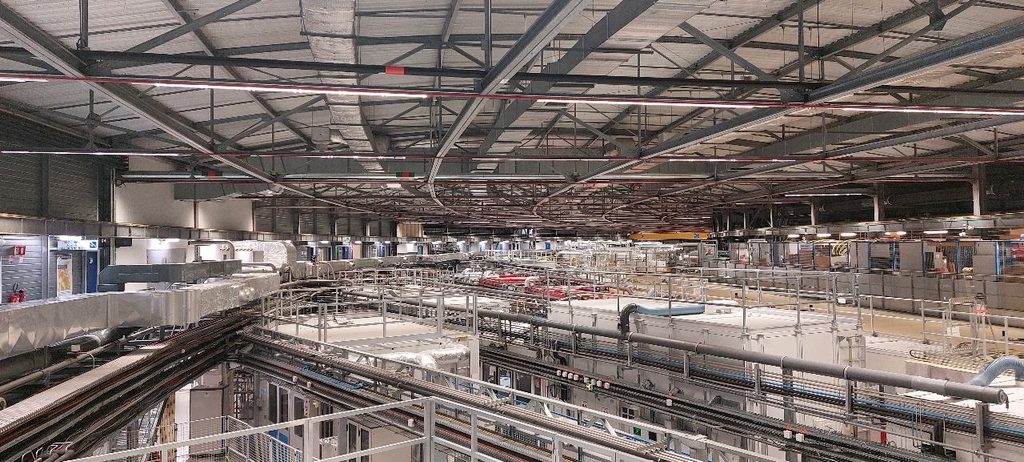
How can researchers be provided with equal access to Europe’s most advanced research infrastructures? How can new users be effectively prepared to conduct experiments at synchrotrons and free-electron lasers? These were among the key challenges discussed at the General Assembly of the European Synchrotron and FEL User Organisation (ESUO), held on 25–27 August at the European Synchrotron Radiation Facility (ESRF) in Grenoble. The NEPHEWS project, an important partner of ESUO in supporting the European research infrastructure user community, also contributed to the organisation of this year’s meeting.
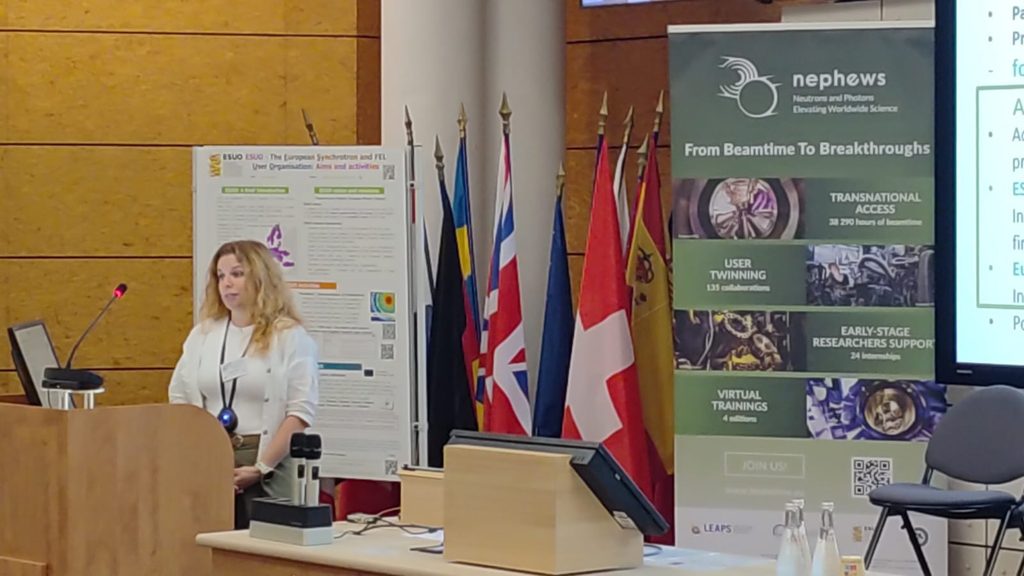
During the meeting, Dr. Anna Wach, attending for the first time in her role as an ESUO delegate, presented Poland’s national report, outlining the current situation and priorities of the Polish user community. The report focused in particular on Polish researchers’ access to SOLARIS, ESRF and European XFEL, as well as on funding for research carried out at these facilities. Key priorities included the further development of SOLARIS, supporting Polish researchers’ access to synchrotron radiation (SR) and FEL facilities, and organising conferences, schools and courses to develop the skills of both current and future users. Dr Wach emphasised that the Polish synchrotron radiation and free-electron laser user community currently comprises around 1,000 researchers.
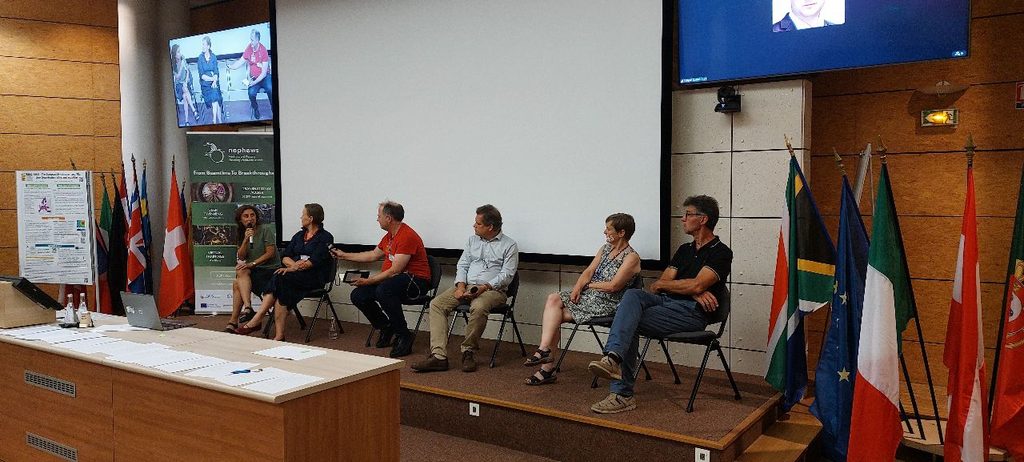
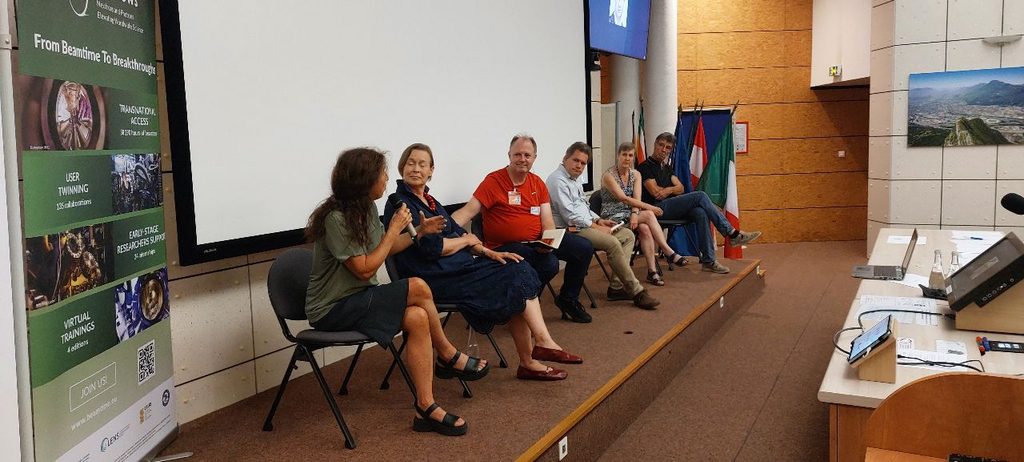
Cooperation between ESUO and the NEPHEWS project was an important part of the meeting. Piotr Piwowarczyk took part in a panel discussion on the involvement of user communities in European collaboration, provided an update on the project as it approaches completion, and presented an analysis of future opportunities for Transnational Access (TNA) under the 2027 INFRA-SERV calls.
Discussions in Grenoble focused on equitable access to research infrastructures, training for new users, and solutions that will help sustain European cooperation beyond the end of NEPHEWS. As Piotr Piwowarczyk highlighted, one of the project’s important outcomes will be a policy white paper setting out recommendations for the future of access to European research infrastructures. The document is scheduled to be presented in Brussels in spring 2027.
The meeting in Grenoble demonstrated that access to advanced research infrastructures is about much more than beamtime alone. Funding, user expertise, the exchange of experience and cross-border cooperation are equally important.
ESUO brings together representatives of national communities of researchers using synchrotrons and free-electron lasers. The organisation provides a voice on issues related to access to these facilities and represents users’ needs at the European level. Poland is represented in ESUO by Dr. Anna Wach from SOLARIS and Prof. Agnieszka Witkowska from Gdańsk University of Technology.