
From 1–7 December 2025, SOLARIS National Synchrotron Radiation Centre in Poland hosted a young scientist within the framework of the NEPHEWS Twinning programme, an initiative designed to strengthen skills, knowledge exchange, and long-term collaboration around large-scale research infrastructures. The visit of Raquel Pacheco from NOVA University of Lisbon (Portugal), accompanied by her mentor Ana Silva, became a vivid example of how Twinning programmes empower early-career researchers while fostering international scientific cooperation.
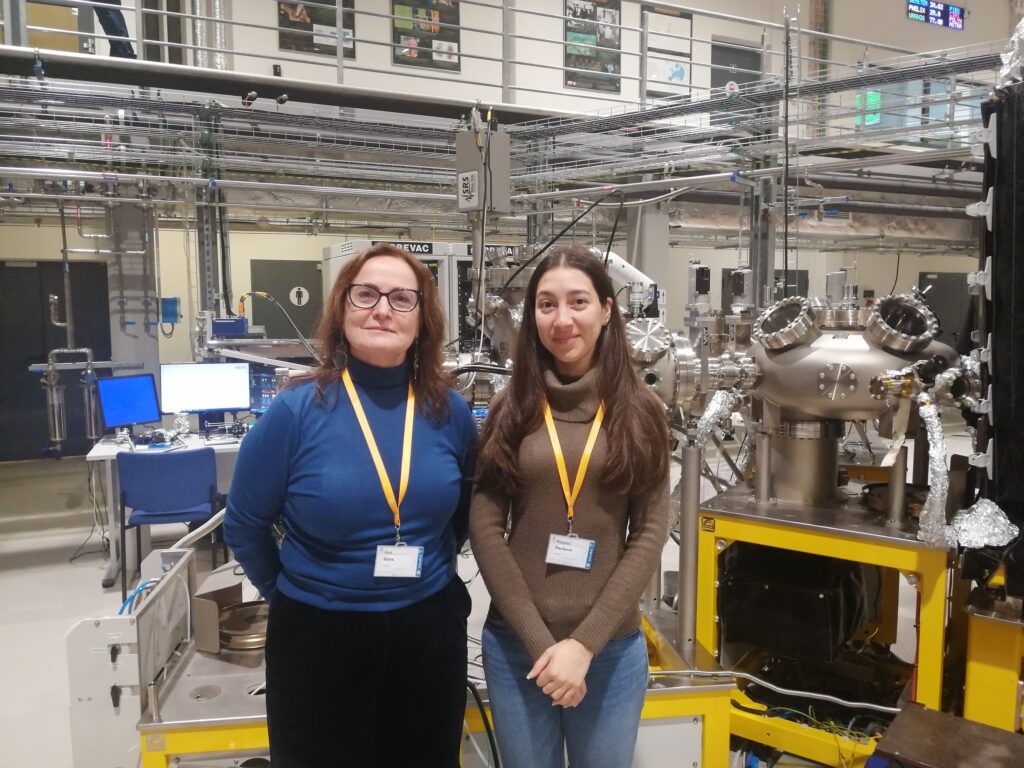
Ana Silva and Raquel Pacheco at the SOLARIS
During her stay, Raquel Pacheco was supported by the SOLARIS scientific team and guided by experienced beamline scientists. She had the opportunity to become familiar with the advanced instrumentation available at the PHELIX beamline, under the supervision of Dr Tomasz Sobol and Dr Edyta Beyer, as well as with Raman Spectrometer Technology at the ASTRA beamline, supported by Dr Lulu Alluhaibi. This hands-on access allowed her to expand her methodological expertise and directly engage with cutting-edge synchrotron techniques.
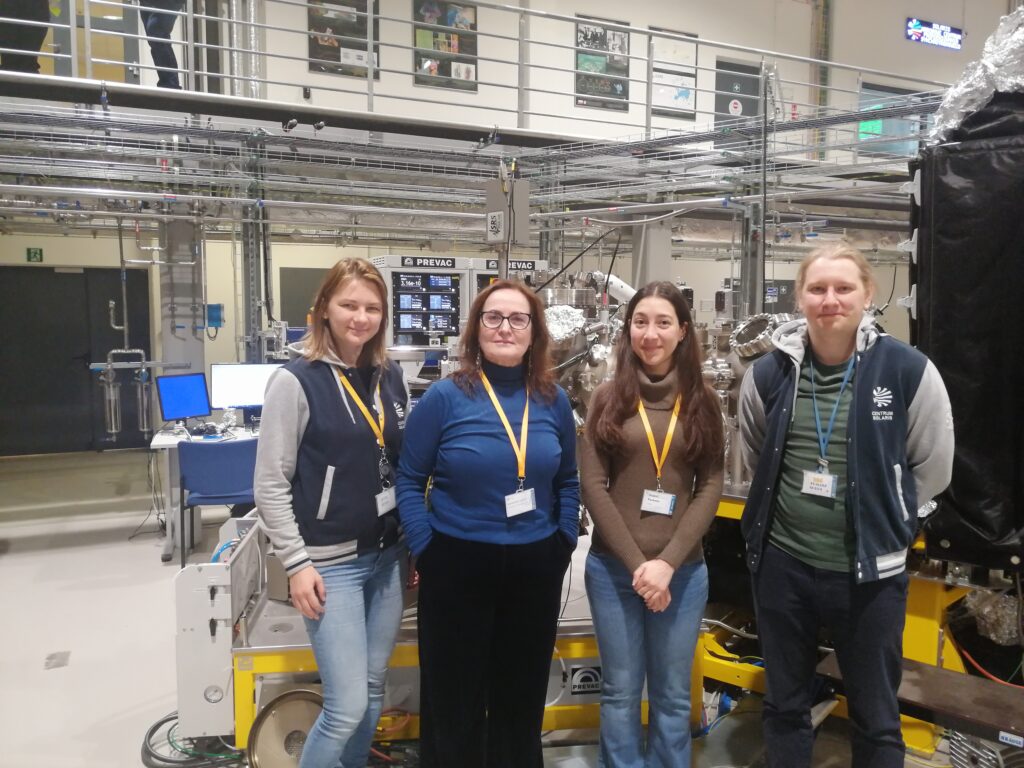
Edyta Beyer, Ana Silva, Raquel Pacheco, and Tomasz Sobol at the PHELIX beamline
Below is Raquel Pacheco’s own account of her experience as a participant in the NEPHEWS Twinning programme:
“I was at SOLARIS under the NEPHEWS Twinning programme. I had the opportunity to get in close contact with techniques I had no experience with, and I was able to learn about a new research infrastructure and a little bit about the Polish culture and customs as well. I could join the analysis of amyloid fibril using s-SNOM/AFM-IR. One of my research interests is protein fibres, so I was really pleased that the subject of study was so closely related to one of my research areas. It was also gratifying to feel that I was able to contribute a little to the work that was being done with my knowledge and experience. I was very well received by my hosting group and all SOLARIS team.
Programmes similar to NEPHEWS are very important since they grant access to cutting-edge infrastructures, increase the expertise levels of the users, and promote the establishment of collaborations. The NEPHEWS support (for travel and accommodation) was fundamental to my stay at SOLARIS because I couldn’t have accessed this facility without it.
If you see the NEPHEWS project as an opportunity for growing scientifically, and you have the chance to apply, you should do it without any doubt. I have nothing but positive aspects to point out.”
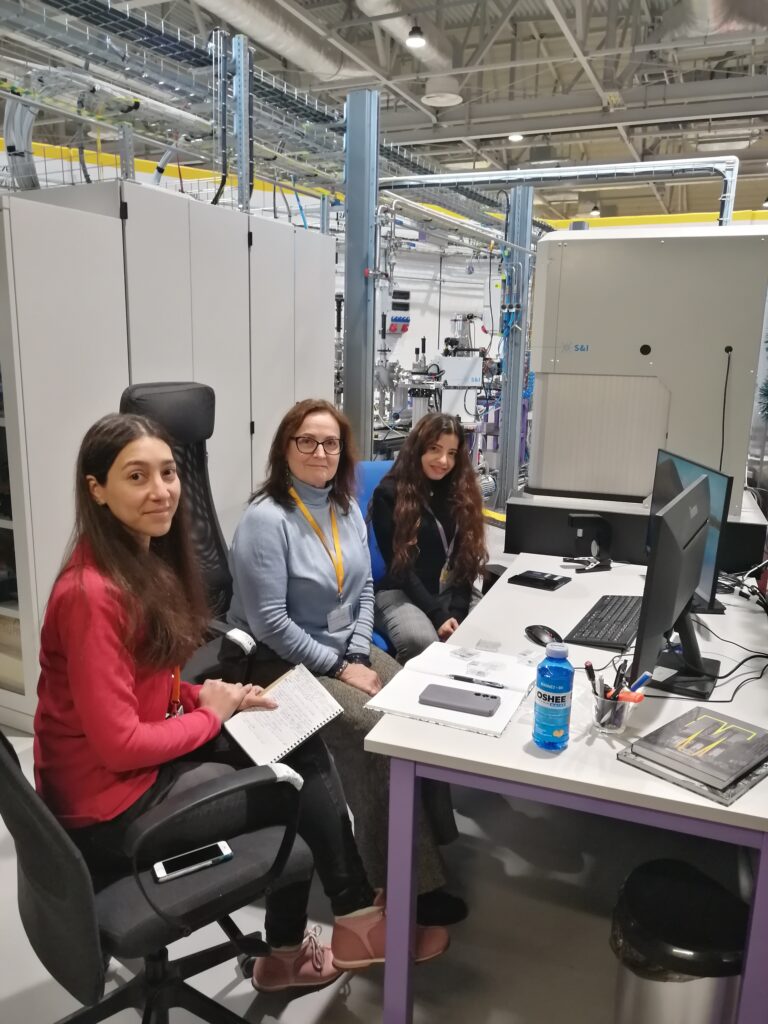
Raquel Pacheco, Ana Silva and Lulu Alluhaibi at the ASTRA beamline
Raquel was accompanied throughout her visit by Ana Silva, an experienced user of the SOLARIS infrastructure and her mentor from the same home institution. Ana Silva also shared her perspective on the importance of the Twinning NEPHEWS initiative and the value of the SOLARIS environment:
“The Twinning Programme under the NEPHEWS project is highly relevant for the development of scientific excellence through the successful training of young researchers, scientists, and engineers who will lead the future of scientific development and innovation.
The combination of online and on-site Twinning programmes represents a valuable and effective approach, offering excellent and unique opportunities to explore different aspects of training at the forefront of cutting-edge research infrastructures and science.
Programmes such as Twinning are essential, as they enable younger generations to become aware of large-scale research infrastructures and to understand their social, economic, and scientific impact, directly and/or indirectly.
Twinning programmes also provide outstanding opportunities to engage with senior and highly experienced scientists, fostering collaborations that would otherwise be difficult to establish within the context of large-scale research infrastructure science and applications.
Portugal does not host large-scale research infrastructures. Therefore, for Portuguese researchers, both early-career and senior scientists who wish to further develop their research using different facilities, participation in programmes like Twinning is often the only viable pathway.
The experience at SOLARIS through the NEPHEWS project has been extremely valuable. It supported Portuguese researchers with on-site access, allowing direct interaction with beamline scientists across several beamlines, including PHELIX, ASTRA, CIRI, URANOS, and PIRX. These interactions enabled in-depth discussions on future project opportunities, fostered new collaborations, and provided a clear understanding of the capabilities offered by each beamline and end station.
Additionally, participants had the opportunity to join ongoing experiments, gaining first-hand knowledge of the practical capabilities and limitations of specific techniques. Finally, SOLARIS offers an excellent working environment, with highly skilled, supportive staff, making it an appealing and attractive facility for visiting researchers.”
This visit clearly demonstrates how the NEPHEWS Twinning programme, combined with the openness and expertise of the SOLARIS Team, creates meaningful opportunities for training, collaboration, and scientific growth. For both early-career researchers and their mentors, such experiences not only build technical competence but also lay the foundation for long-term international partnerships and future joint research projects.