
As part of the NEPHEW Twinning Programme, Otieno Winstone Ochieng, a postgraduate researcher from Tom Mboya University (Kenya), visited European XFEL from 5–12 May 2026. Hosted at the MID (Materials Imaging and Dynamics) instrument by Dr. Trey Wilson, the twinning provided an opportunity to gain practical experience with state-of-the-art Free-electron laser and X-ray scattering techniques supporting advanced materials research.
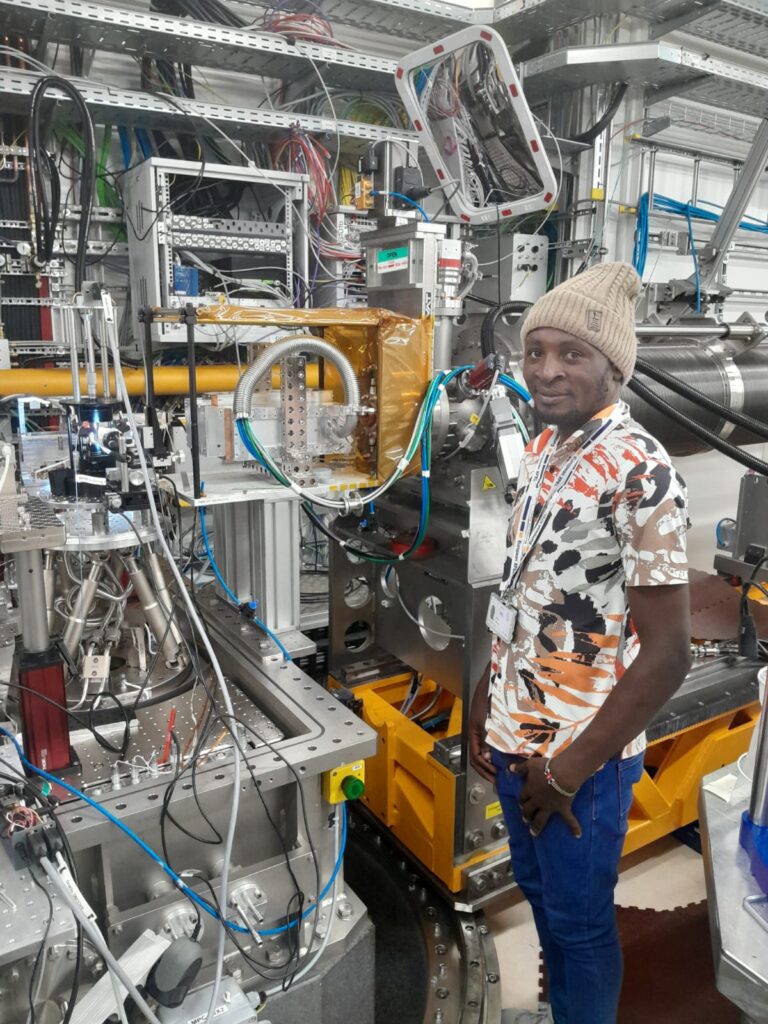
Otieno’s research focuses on environmental chemistry, bio-based nanomaterials and advanced water treatment technologies, particularly the development of magnetized lanthanum-doped zirconium oxide animal-shell nanocomposites for fluoride remediation. The visit allowed him to directly connect his research with cutting-edge experimental methods available at European XFEL.
During the experiment, Otieno received hands-on training in beamline operation, including capillary tube preparation, sample loading and experimental procedures. Working alongside Dr. Trey Wilson and the MID team, he observed real-time scattering measurements and learned how particle dynamics and crystallisation processes can be analysed using advanced X-ray techniques. The experience also provided valuable insights into the interpretation of scattering data and the relationship between scattering intensity and structural evolution.
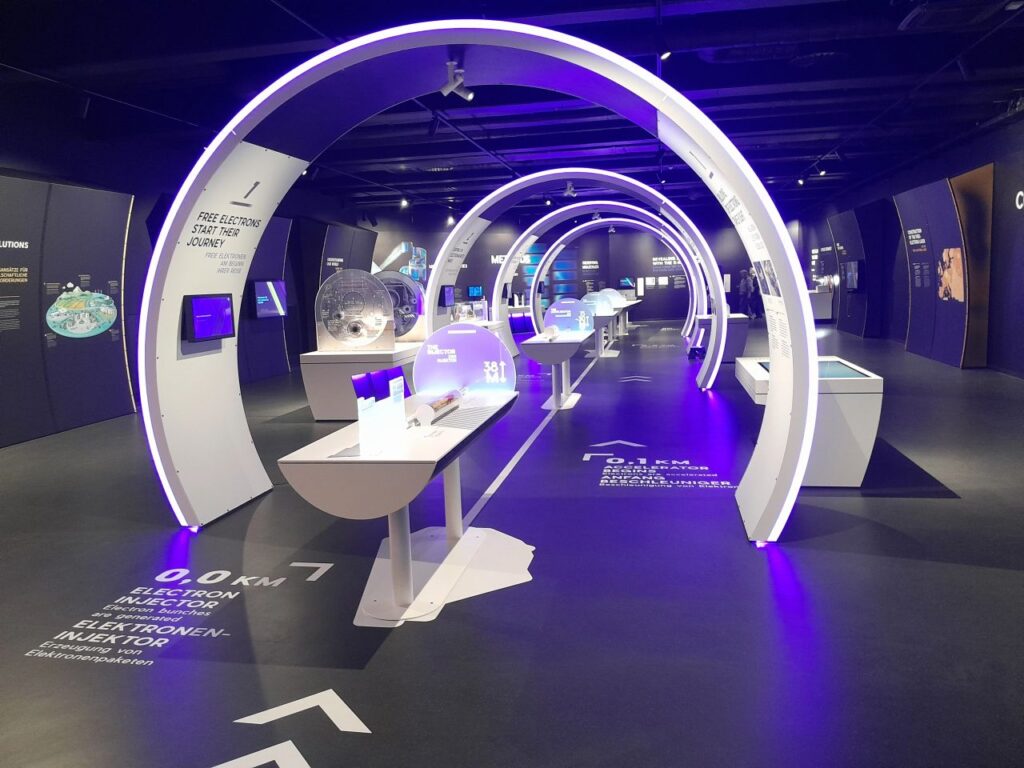
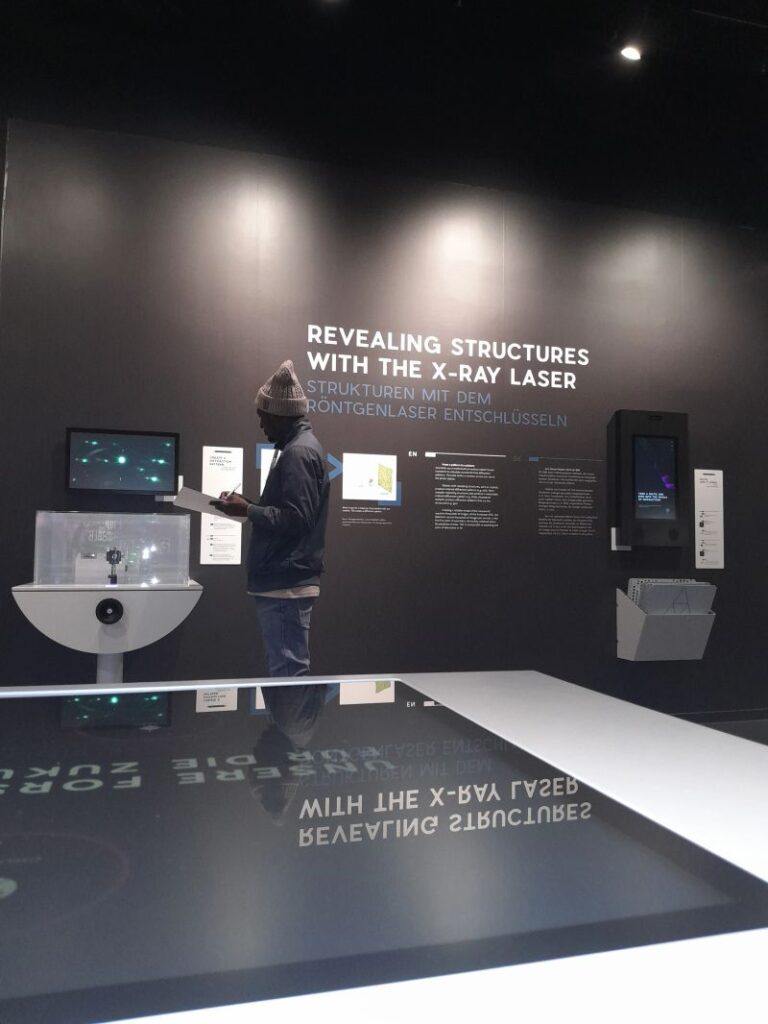
Reflecting on the experience, Otieno explained that the Twinning Programme offered „a unique opportunity to gain hands-on experience with advanced time-resolved X-ray techniques” that are highly relevant to his current research. He believes the knowledge acquired at European XFEL will strengthen advanced materials characterisation research at Tom Mboya University and contribute to capacity building through the training of students and researchers. The experience is also expected to support future collaborative research involving modern characterisation techniques such as XRD, AFM, SEM, TEM and SAXS for environmental and energy-related applications. The NEPHEW Twinning Programme promotes knowledge exchange between African universities and leading European research infrastructures by providing early-career researchers with direct access to world-class facilities and expertise. Through initiatives such as this visit, European XFEL contributes to developing scientific excellence, fostering international collaboration and supporting the next generation of researchers in advanced photon science.
Author: European XFEL